
Weekly Update June Monday 7th 2021
DWP considers single annual charge for workplace pensions

The Department for Work and Pensions is considering to introduce a universal charging structure, in the form of a percentage fee charged annually, for default funds in defined contribution schemes.
The proposal is one of a number contained in a consultation, published May 24, which followed another published in January in which the decision was taken to ban the charging of flat fees on pots under £100.
The purpose of a universal charging structure for DC default funds would be to help people understand their charges better and improve member engagement, the government said.
It stated: “This in turn may enable members to compare pensions and exercise choice where they feel an alternative pension product could more closely meet their needs.”
There are currently three permitted charging structures:
• a single percentage charge of the pot value, taken at the end of each year and capped at 0.75 per cent of funds under management;
• a combination of a percentage charged on each new contribution made, plus an annual percentage of funds under management charge; and
• a combination of a monthly or annual flat fee plus an annual percentage of funds under management charge.
The consultation proposed whittling this down to a single, universal charging structure allowing for a single percentage annual management charge based on the value of the member’s pot within the default fund.
Although the move was welcomed for the clarity it might give to DC savers, experts have warned of the problems it would cause for master trusts as it outlaws combination charging.
The document acknowledged that the proposal would “inevitably impact” providers who currently use alternative structures and pledged to consider “carefully” any impact on existing or potential members.
In his foreword, Guy Opperman, minister for pensions and financial inclusion, wrote: “We said that in 2021 we would look at how we could make it as easy as possible for pension savers to have access to comprehensive and transparent information on costs and charges.
Pension benefit ignorance means retirees are losing millions, charity warns

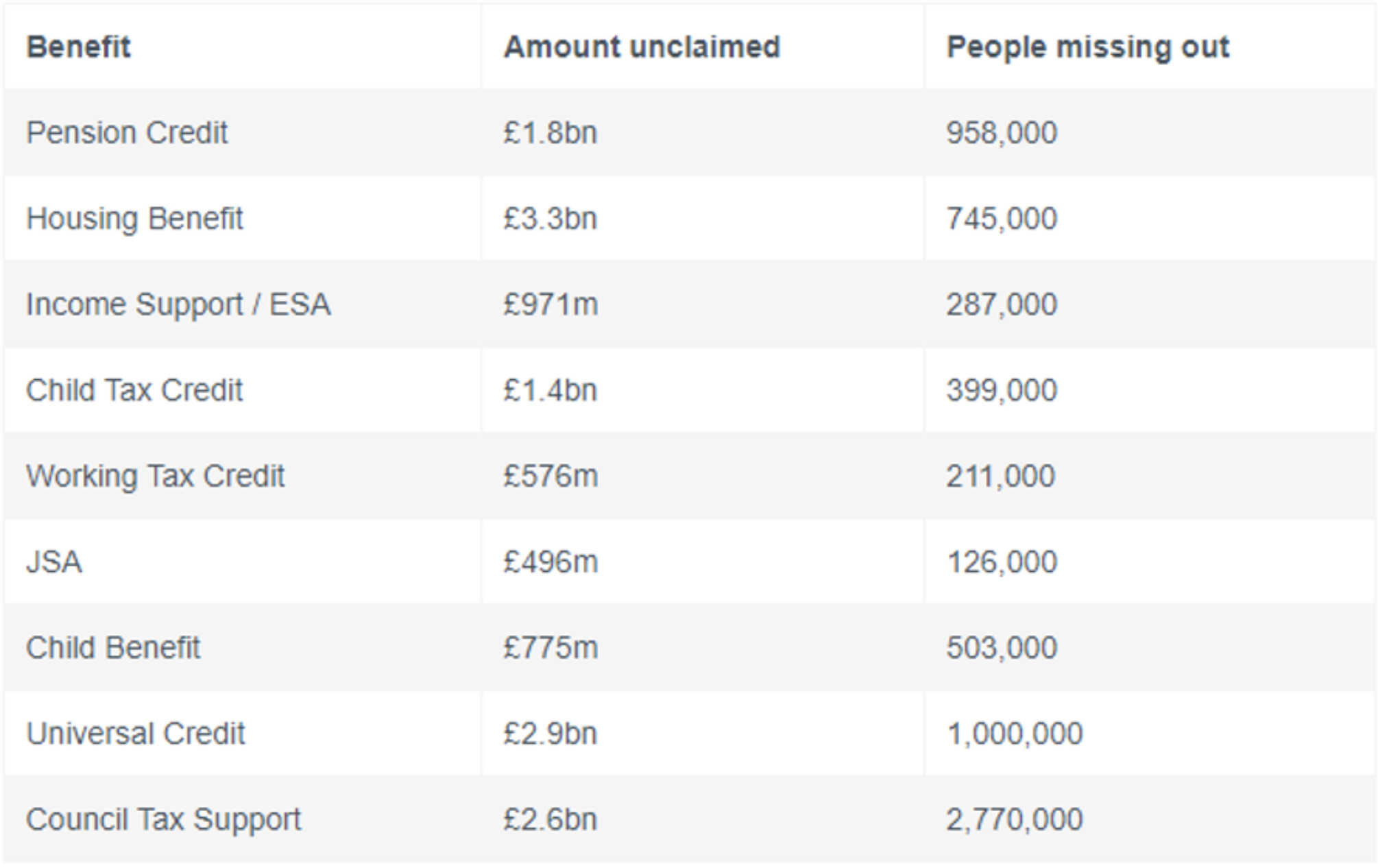
Pensioners are the least likely to have checked their pension benefit entitlements, meaning millions of pounds is left unclaimed each year.
According to research by national poverty charity Turn2us, 63 per cent of Britons who are of pensionable age have never checked to see what benefits they can claim.
They are also the least likely age group to claim any benefits to which they are entitled, which means one in three is missing out on what could be invaluable pension credit.
Sonya Ruparel, director of programmes and partnerships at Turn2us, said: “There is an endemic issue of unclaimed benefits in the UK. The confusing, sometimes hostile, and often stigmatising world of social security has led to millions of people not claiming their entitlements.”
DB transfers hit by pandemic and rule changes

Cash equivalent transfer values have been significantly impacted by both the coronavirus pandemic and shake-up of defined benefit transfer advice rules, according to Barnett Waddingham.
The consultancy found the number of transfer quotes requested by members dropped between 20 and 40 per cent in each of the lockdowns, and overall was nearly down 10 per cent in the 12 months to March 2021.
Barnett Waddingham said the Financial Conduct Authority’s ban on contingent charging, which came into force in October 2020, and the reduction in the number of companies now prepared to give DB transfer advice, may have contributed to the fall in demand.
Contingent charging means clients only pay for the advice if they go ahead with a transfer. It applies to all transfers apart from consumers with certain identifiable circumstances, such as those suffering from serious ill health or experiencing serious financial hardship.
Despite the overall dip in activity, transfer activity bounced back in February and March 2021, with CETV requests about 50 per cent higher than on average compared with the previous 10 months, going back to the start of the pandemic. According to Barnett Waddingham, this could be due to a pent-up demand for members to consider their options.
Meanwhile, during March and April 2020, the average CETV amount shifted significantly in response to high levels of market uncertainty.
Previous analysis from Barnett Waddingham found that an average 60-year-old individual may have seen the value of their benefits change by as much as 15 per cent in the space of a two-week period in the middle of March 2020.
But while these significant short-term movements have not been seen since, a typical transfer value has fallen significantly during 2021, to the extent that CETVs may now be lower than at the end of March 2020 — possibly by as much as 7 per cent for a 60-year-old member, the consultancy said.
Mark Tinsley, associate at Barnett Waddingham, said: “Trustees and sponsors need to remain alert to market volatility and the knock-on impact for members looking to transfer out.
“Ensuring that the CETV terms remain robust to changes in market conditions is key, as well as having processes in place to temporarily suspend transfer value quotations in the event of extreme market movements.”
Ombudsman gives providers a month to update transfer processes

The Pensions Ombudsman expects pension providers to update their transfer processes, due diligence checks and member communications within one month of the new scams regulatory guidance being issued.
The new time frame, announced in a recent decision, is significantly less than the three-month period the ombudsman had previously indicated would be acceptable.
Pension providers, schemes and administrators should ensure that they have processes in place to identify and review new regulatory guidance relating to transfers and scams, and to implement any required changes promptly in light of this determination, Herbert Smith FreeHills stated.
The ombudsman’s decision refers to Mr R, a member of the Scottish Motor Auctions Ltd group personal pension plan, who had put forward a complaint against Aegon in 2017
In 2012, Mr R transferred his pension benefits to a smaller scheme administered by Greenchurch Capital. The scheme then submitted paperwork to Aegon on February 13 2013, a day before the Pensions Regulator issued its new Scorpion leaflet and updated its regulatory guidance on pension scams.
On February 15, Aegon transferred an amount of £21,461.92 to Greenchurch. However, an administrative error within the receiving scheme’s bank meant that the entire transfer value was refunded back to Aegon.
Later, the transfer was completed on March 19, just more than a month after the Scorpion literature was published.
Aegon accused of failing new due diligence rules. As result, in 2017 Mr R complained that Aegon did not proceed with appropriate checks before transferring his pension to Greenchurch. He also argued that Aegon should have known that the receiving scheme’s administrator was not regulated by the Financial Conduct Authority.
Furthermore, Mr R stated that Aegon did not act with the new due diligence expectations, which the regulator set out in the Scorpion guidance document.
The document detailed information for both providers and consumers relating to pension scams and listed several points associated with potential scams, including a warning on schemes that were newly registered with HM Revenue & Customs.
Mr R stated that Aegon failed to inform him of the risks of transferring his pension benefits to the small self-administered scheme, and said if he had known then he would not have proceeded with the transfer.
At the time, Aegon claimed that it acted appropriately and conducted adequate due diligence.
The provider pointed to previous determinations in which the ombudsman said that providers should be given up to three months to update their transfer processes following the publication of the Scorpion guidance.
The ombudsman did not proceed with Mr R’s complaint and found that Aegon had acted appropriately, agreeing that the provider was not required to have updated its transfer processes before the date the transfer was originally made.
However, the ombudsman reviewed the cases he previously determined on the issue and considered that “a period of approximately one month would generally be sufficient for a provider to put in place any procedures necessary as a result of the regulator’s new guidance”.
Where a provider cannot meet this timeframe, the ombudsman stated that he would expect it to consider suspending transfers until changes to its processes and member communications could be sought.